

Hilox Lighting
Dog vs. Fleas and Ticks
Redactie Hilox Lighting
By Redactie Hilox Lighting
Published
Reading time
5 min

Short answer

How do you deal with fleas and ticks on your dog?

Fleas and ticks on dogs call for different approaches: for fleas you use a good flea treatment, a flea comb, spray in the house and plenty of vacuuming. A tick you remove as soon as possible, preferably within 24 hours, with tick tweezers as close to the skin as you can get.
  • A flea is 2 to 3 mm long and reddish brown to black.
  • Fleas can cause itching, flea allergy and tapeworm eggs.
  • Ticks live in shrubs, grasses and heathland and are active all year round.
  • Numbing a tick with alcohol is outdated.
  • If your dog seems ill, weak or nauseous after a tick bite, get in touch with your vet.

Dog vs. flea and tick

Here we go again: the sun starts to shine and the nasty little critters take up their positions. Since fleas and ticks are a nightmare for just about every dog owner, I went and gathered some information.

What should we do when our buddy has become a "host"? And more importantly, how do we stop our four-legged friends from becoming victims in the first place? I have lined up all the info for you.


Fleas and ticks on dogs: fleas first

This biting little parasite sadly never shows up alone. To stop us from panicking at every black dot that jumps up, I looked up what a flea actually looks like. Be warned, these critters are tiny. A magnifying glass is almost a must.

Appearance

  • 2 to 3 mm long
  • Reddish brown to black
  • Relatively long legs for their size
  • Looks properly nasty through a magnifying glass

The chicken or the egg

  • After a meal, the female lays dozens of eggs on your dog (or cat)
  • These roll out of the coat and end up in your home
  • After 2 to 4 days, larvae hatch from the eggs
  • The larvae hide in dark spots (under the skirting boards)
  • After 2 to 3 weeks of feasting on the droppings of other fleas, the larva pupates (like a caterpillar)
  • After about 6 weeks, a fully grown flea of 2 mm emerges
  • This flea heads back to your dog (or cat) to have a good meal and lay eggs

Dog vs. flea

I may be talking about it lightly, but it is no laughing matter. With an itch all over my body, I have been reading up on these horrible creatures and I honestly find it a scary thought that it could happen to our four-legged friends. A flea infestation can cause the following problems:

  • Itching. A flea bite is painful, and the spot where the flea bit gets irritated and so it itches.
  • Flea allergy. With every bite, a flea leaves some saliva behind. If your buddy is sensitive to this stuff, an allergy can develop after too many bites. The dog will then scratch and bite themselves until they bleed.
  • Worms. As if the above is not enough, these parasites can carry tapeworm eggs.

Human vs. flea

A serious infestation does not leave us humans alone either: we can become victims too. Because I like to stay positive, I looked into what we can do about fleas. Luckily, there are several options.

  • Get a good flea treatment. One that kills everything, so to speak (except the dog, of course)
  • With a flea comb you can catch adult fleas, so get combing!
  • There is a spray for your home that kills larvae and adult fleas
  • Vacuum thoroughly, especially (or rather, precisely) the dark and hard-to-reach corners
  • Too late? Then wash everything that fits in the washing machine, and don't forget your dog's bed or blanket

Ticks

Ticks do not come in an infestation, and are a bit easier to deal with. But ticks are active all year round these days, and they can make our four-legged friends (and us) seriously ill. Ticks do not drop out of trees, but live in all kinds of shrubs, grasses and heathland. So basically anywhere you walk.

Appearance

  • Looks like a small, flat spider
  • Small head, bigger and rounder body
  • Length varies between 1 mm and 1 cm
  • Dark in colour
  • Larvae have 6 legs, adults have 8

The chicken or the egg

  • Male and female mate, usually on the host
  • The female then gorges herself on blood and drops to the ground
  • The blood helps the eggs develop properly, and once they are "ripe" the female lays her eggs (usually in autumn)
  • The female dies
  • In spring, the 1,000 to 2,000 eggs hatch
  • The larvae feed on small rodents and birds. Only female ticks bite, the males do not
  • After summer, the larvae become nymphs, and these nymphs feed on slightly larger mammals
  • At the end of the following summer, the nymph becomes an adult tick and goes looking for even larger mammals

Did you know that it is only in this last stage that it is decided whether the tick is male or female?

Dog vs. tick

Dogs generally notice very little of a tick bite, though in some cases they will lick the bitten spot. It is recommended to remove a tick quickly, preferably within 24 hours. Want to know whether your buddy has been bitten? Then check your four-legged friend thoroughly after every walk, and a good romp is allowed to be part of it. Because a dog can become ill after a tick bite, it is important to protect your dog against ticks, for example with drops on the neck or a tick collar. It is no guarantee, but every little bit helps.

Does your dog seem ill, weak or nauseous after a tick bite? Always get in touch with your vet. They can tell you what to do and whether you need to come in.

Human vs. tick

It has of course been known for centuries that we can fall victim to this horrible critter too, so check yourself properly after a walk in the woods. I looked up the best way to remove a tick, and you use this method on both your dog and yourself.

  • Always remove the tick with tick tweezers. Ordinary tweezers or your fingers can leave the head behind
  • You can get tick tweezers at the vet and at pet shops
  • Numbing the tick with alcohol is outdated: the alcohol makes them regurgitate their contents into the dog
  • Grab the tick as close to the dog's skin as possible, so the head doesn't stay behind after all
  • Turn the tick tweezers clockwise or anticlockwise, whatever works.
  • Is the tick off? Check to be sure you got all of it. Is the head still in there? In principle it will fester out by itself. Does the spot still look a bit suspicious? Then get in touch with your vet

Tip: Tick tweezers come in different shapes, too. So read carefully how to position them before you use them.

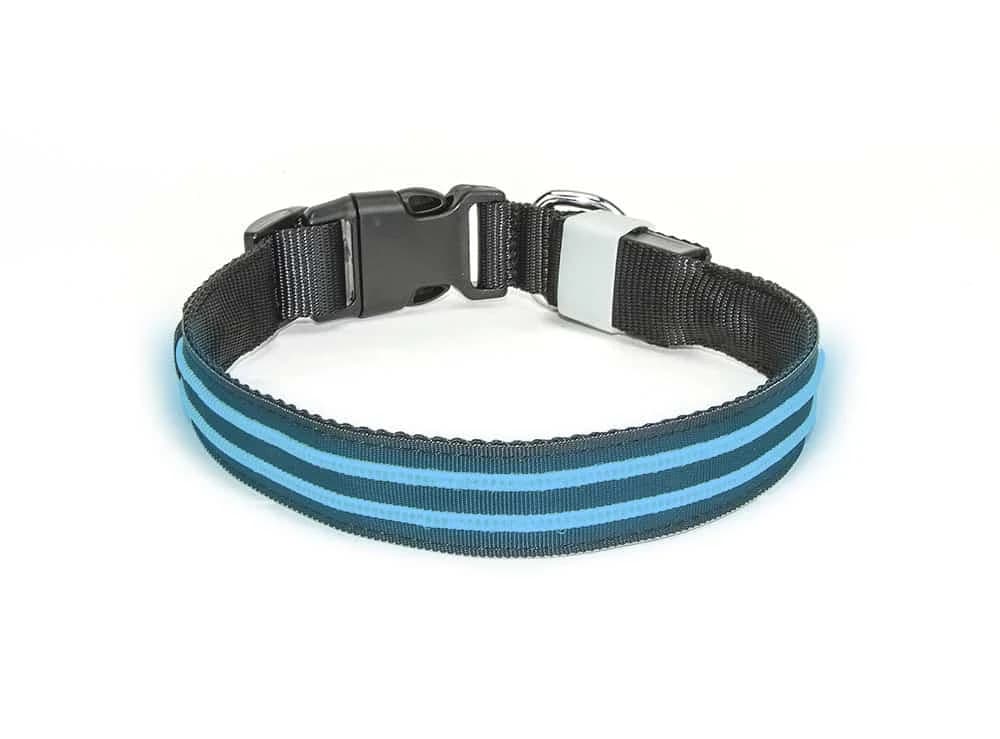
Walking through shrubs and heathland at dusk or in the dark? Then take a look at our LED dog collars and other lighting for your dog.

Frequently asked questions about fleas and ticks on dogs

How do you recognise a flea?
A flea is 2 to 3 mm long, reddish brown to black, and has relatively long legs for its size. A magnifying glass is almost a must.
What do you do about a flea infestation?
Use a good flea treatment, comb out adult fleas with a flea comb, use spray in the house, vacuum thoroughly and wash everything that fits in the washing machine, including your dog's bed or blanket.
Where do dogs pick up ticks?
Ticks do not drop out of trees, but live in shrubs, grasses and heathland. So basically anywhere you walk. Ticks are active all year round these days.
How do you remove a tick from your dog?
Always use tick tweezers, grab the tick as close to the skin as possible and turn clockwise or anticlockwise. Preferably remove the tick within 24 hours. Numbing it with alcohol is outdated.
When do you go to the vet after a tick bite?
If your dog seems ill, weak or nauseous after a tick bite, or if the spot looks suspicious.
Fire it up

Once a month,
a real letter.

New products, fitting tips and offers. No noise, never sold on.

Made withNeuramerce