Hilox Lighting
Getting a Dog? Use Our Checklist

Getting a Dog? Use Our Checklist

Redactie Hilox Lighting
By Redactie Hilox Lighting
Published
Reading time
3 min

Short answer

What do you need when you get a dog or puppy?

If you are getting a dog, you will need a basket, food and water bowls, a collar, a leash, poo bags, toys, treats and healthy kibble, among other things. Think about health too: ask about vaccinations, have the dog checked by a vet and register the chip straight away.
  • With a puppy, add training pads, or a pile of newspapers.
  • A crate or travel basket can be a lifesaver in some cases.
  • Choose kibble made from natural ingredients without artificial additives.
  • Register the chip at your new address straight away.

Buying a puppy

When you get a puppy, it helps to ask yourself beforehand: what do we actually need? We used a checklist ourselves, and we would love to share it with you.

If you are not getting a puppy but a somewhat older dog, you can (hopefully) cross the training pads off the list.

Getting a dog: the checklist

  • A comfy basket, a nice soft blanket or cushion
  • Bowls, 1 for water and 1 for food. Tip: do you want your dog in the garden a lot? Then get a set of extra bowls, so you don't have to drag them back and forth every time
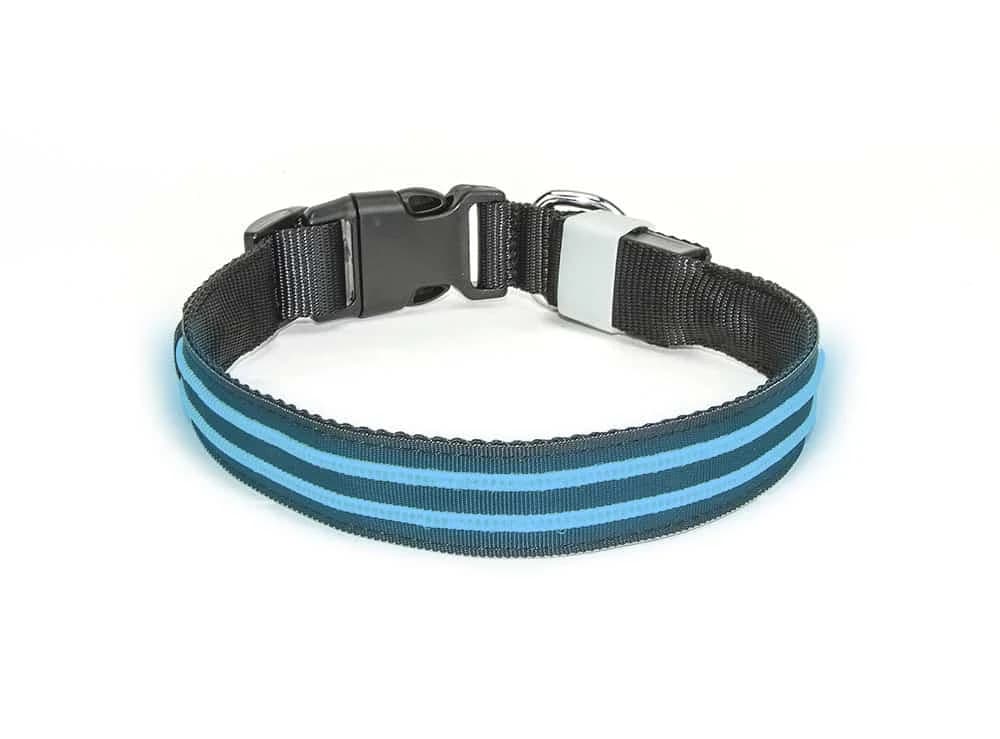
  • A (LED) dog collar
  • A (LED) dog leash
  • Poo bags
  • One or more (chew) toys
  • Tasty and healthy treats and training snacks
  • Natural and healthy dog kibble
  • Is the puppy not house-trained yet? Then there are special training pads. Of course, you can also set aside a pile of newspapers for this training
  • In some cases a crate and/or travel basket can be a lifesaver
  • Get a good training book, or sign up at your local dog club for the best training tips
  • Flea and worm treatment (see the vet tips below)
  • A comb and/or brush (depends on your dog's coat, the pet shop can advise you)

The right kibble

Choose kibble made from natural ingredients without artificial additives.

Puppy kibble

Did you get a young puppy? Then you can soak the kibble in lukewarm water for a bit, which makes it a little softer.

What else to think about

Besides buying all the stuff, it also pays to think about your puppy's health. Let me list a few important details for you.

  • Ask the person or breeder you are buying from whether your new buddy has already had vaccinations, and check this in the passport you receive. Most (experienced) breeders can also tell you straight away when the puppy needs the next vaccination.
  • However awkward it sounds, ask whether you can have the dog checked over. With Hera we got 2 days to have her examined by a vet of our own choosing. It was quite a relief to hear she was a good catch!
  • After you get your dog, visit the vet anyway. They can tell you what to expect when it comes to vaccinations, worm and flea treatment and other things.
  • And last but not least: ask whether the dog has a chip, and make sure you register it straight away (!)

You can read more about fleas and ticks in fleas and ticks on dogs.

Microchipping

This was another painful lesson that we are honestly a bit ashamed of.. But! We will eat humble pie and tell you anyway, just to warn you.

Our sweet puppy Hera had a chip, all neat and proper, but on day 1 we didn't think of entering the new address. On day 2, Hera suddenly vanished.

I can tell you this now: calling out to a dog who doesn't know her name yet is pretty much useless. But as persistent as we were, the whole neighbourhood had to hear us search for "Heeeeeraaaaaa". After hours of searching, the police called us back: Hera had been dropped off at the station by the bin men.

To make sure your found buddy can be reunited with you, you can have your dog chipped at the vet. The code is stuck into the passport.


Make your home and garden safe before your dog arrives

Hera's story shows how quickly a new dog can bolt. So before day one, take a walk around the house and garden:

  • Check the fence. Look for holes, loose planks and spots where a puppy can squeeze underneath.
  • Keep doors and gates closed. Agree with everyone in the house that the front door and the garden gate don't stay open.
  • Tidy away cables and small items. Puppies investigate everything with their mouths.
  • Put cleaning products and medicines up high or behind a cupboard door.
  • Create a fixed resting place. A basket or crate in a quiet spot gives your dog a safe corner of their own.

Walking safely in the dark: LED dog collar and leash

The checklist includes a (LED) dog collar and a (LED) dog leash. Especially in autumn and winter, you often walk in the dark. A lit-up collar helps your dog stay visible, to you and to other road users.

One example is the Hilox PX1 Rechargeable LED Dog Collar. According to the product details:

  • rechargeable battery with USB cable, charging time of about 1 hour and 40 minutes;
  • about 4 to 5 hours of light on a full charge;
  • 3 modes: constant, fast flashing and slow flashing;
  • IP65, splash-proof, made of strong nylon;
  • can handle a pulling force of about 100 kg, so your dog doesn't need to wear it next to an ordinary collar.

Choosing the right size: measure the collar your dog wears now, or measure the circumference of the neck. Leave at least 2 fingers of room underneath, so the collar isn't too tight. A puppy grows fast, so check the fit regularly.

Also take a look at the LED leashes, such as the PX7 LED Dog Leash.

The first days with your new dog

The first days are mostly about getting used to things for your dog: a new environment, new smells and new people. A few tips to keep it calm:

  • Sort the chip on day 1. Put the registration in your own name and address straight away.
  • Give them peace. Let your dog explore the house at their own pace and keep visitors to a minimum for the first few days.
  • Set a fixed routine. Fixed times for eating, walks and sleeping give them something to hold on to.
  • Practise house-training. Take a puppy outside often, for example after sleeping, playing and eating, and reward them when they do their business outside.
  • Practise the name. As Hera showed, a new dog doesn't respond to their name yet. Practise it indoors with something tasty.
  • Plan a visit to the vet. Discuss vaccinations, worming and a flea and tick treatment.

Frequently asked questions about getting a dog

What do you need for a new puppy?
A basket or cushion, food and water bowls, a collar and leash, poo bags, toys, treats, healthy kibble, training pads, possibly a crate or travel basket, a training book, flea and worm treatment and a comb or brush.
How do you make kibble suitable for a young puppy?
You can soak the kibble in lukewarm water for a bit. That makes it a little softer.
What do you ask the breeder?
Ask whether the puppy has already had vaccinations and check this in the passport. Also ask whether you can have the dog checked by a vet and whether the dog has a chip.
Why should you register the chip straight away?
With a chip registered at your address, a found dog can be reunited with you. Hera vanished on day 2, while her new address had not been entered yet.
How do you choose the size of an LED dog collar?
Measure the collar your dog wears now or the circumference of the neck, and leave at least 2 fingers of room underneath.
Fire it up

Once a month,
a real letter.

New products, fitting tips and offers. No noise, never sold on.

Made withNeuramerce