

In this column I will introduce you to a Honden zonder toekomst volunteer every month. I will take you behind the scenes and show you all the ins and outs.
Today I am starting with an interview with the face of Honden zonder toekomst: Barry Jacobs.
Short answer
In this column I will introduce you to a Honden zonder toekomst volunteer every month. I will take you behind the scenes and show you all the ins and outs.
Today I am starting with an interview with the face of Honden zonder toekomst: Barry Jacobs.
I have of course met Barry already, and what struck me straight away was his enthusiasm. Barry gives it a full 100% and lets nothing and nobody stand in his way. I asked him a few questions so that we can all get to know him a little better.
I am Barry Jacobs, 41 years old, and I live in Arnhem with my partner Gerard, co-founder of the foundation.
When the foundation was set up I was appointed chairman. In the early years I was coordinator and hands-on jack of all trades. Almost every spare minute went into the foundation and into trying to bring as many dogs as possible out of the miserable conditions on Gran Canaria and over here.
In recent years I have been more active in the background: among other things I look after the website, fly out to Gran Canaria now and then, or go to the airport to pick up dogs when they arrive in the Netherlands.
How much time do I spend on it? When you do a job with passion and love, you do not count the hours. One week I am done in a few hours, the next week I can easily be at it all weekend and/or in the evenings.
Yes, we still have two dogs, Pucho and Kali. Both come from Gran Canaria. A few months ago we had our other dog, ‘Chica’, put to sleep. She was 15 and completely worn out.
Chica was a very special dog and it all started with her. We adopted her as a puppy 15 years ago on Gran Canaria. Without Chica there would probably have been no ‘Honden zonder toekomst’.
I do not really see it as a ‘choice’. By adopting Chica on Gran Canaria we got to know Maria Tempelman. Maria was an elderly Dutch lady who had been rescuing dogs from terrible conditions there for many years. Every year we took dogs for her from Gran Canaria to Germany as flight escorts. Because her health was poor and she had not got the organisation side sorted, we asked whether we could help with anything.
Together with our Spanish rock and mainstay Dori Rico, we helped Maria, and that collaboration gave birth to the current teams of Honden zonder toekomst and Perros sin Fronteras.
That is true. So I would like to go into this question in a bit more depth.
The Netherlands has excellent services, such as shelters, animal police and animal ambulance, mostly government-subsidised. These organisations usually do not lack volunteers.
Many shelters in the Netherlands are not full and have enough capacity to take in animals. And if we look at the type of dogs that end up in Dutch shelters, you often see dogs with behavioural problems, fighting dogs, ADHD dogs and often older or larger dogs too. However blunt it sounds, the pet world runs on supply and demand as well. Someone who comes looking for a nice small family dog (the kind you rarely find in shelters) will not go home with, say, a Rottweiler with a behavioural problem. That would not be sensible either, and luckily most shelters keep an eye on that.
That is exactly the gap we fill. We try to look carefully at which dogs we can rehome, and we mainly take in dogs that have a realistic chance of a successful rehoming.
In the Netherlands there is by now more demand for rehomable dogs than there is suitable supply. More and more shelters also sign an agreement with an organisation like ours: they take in rehomable dogs from abroad and give them a chance that way. That is still always better than people buying a puppy from a puppy farmer who makes a lot of money from it and for whom the welfare of the dogs is often not the priority.
If you are thinking of getting a dog, think carefully first. Consider helping by taking in a foster dog.
Do you not want to adopt a dog but still want to help? That is of course possible too. By following Honden zonder toekomst on social media and sharing posts, we remind people of their responsibilities. That alone is already an enormous contribution. And for those whose budget allows it, a financial contribution is always more than welcome. We cannot exist without donations.
However you look at it, and whether you happen to agree or disagree: the fact is that Barry throws himself wholeheartedly into rescuing dogs that are not doing so well. And as far as I am concerned, there could be many more Barrys who, without any self-interest, make the world a little bit nicer, step by step.
Want to read more about dogs? Have a look at our blog on vaccinating your dog and our products for dogs.

Blown car bulbs count as normal wear and tear and are not reimbursed, while theft and damage sometimes are. Find out what your car insurance covers and how LED and xenon lighting can help.
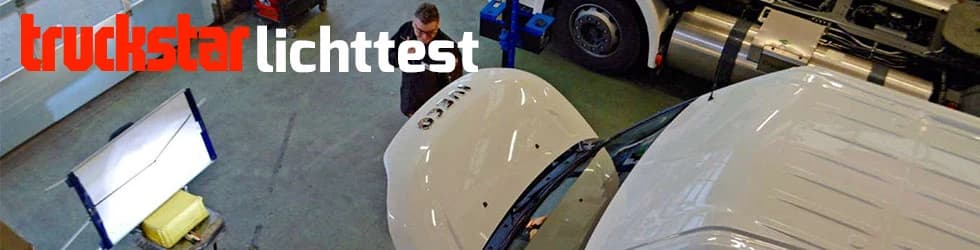
In de dimlicht LED test van Truckstar Magazine kwam de Hilox XTR Black als beste uit de bus. Lees hoe de leds scoorden in reflector- en lenskoplampen, op koeling, CAN-bus en APK.

Looking for a cool Father's Day present? Six Hilox gift ideas, from XTR LED kits and MTB lights to LED dog collars, leashes and electric pepper and salt mills.
New products, fitting tips and offers. No noise, never sold on.

We use cookies and similar techniques. Some are needed to make the shop work, such as your cart and signing in.
With your consent we measure how the site is used, with our own statistics and Google Analytics, so we can make it better. We also show you ads elsewhere that fit you: for that we send data about your visit and purchases to Meta, also from our own server.
Rather not? The shop works just the same. You can change your choice later via Cookies, at the bottom of every page.
