Hilox Lighting
Almost every car maker fails the headlight test

Almost every car maker fails the headlight test

Redactie Hilox Lighting
By Redactie Hilox Lighting
Published
Reading time
1 min

Short answer

Do new cars have good headlights?

According to a US research institute, bad headlights are the rule rather than the exception: the tests showed that only 1 car maker sells a car with seriously good headlights. A stronger halogen bulb gains you about 20%, while a xenon kit or LED kit quickly gives you 300% more light.
  • Still, a handful of manufacturers do set aside extra budget for better headlights.
  • Fitting a xenon or LED kit is plug-and-play in almost all cases.
  • You do not need to make drastic changes to the headlight.
  • Always check the beam pattern after upgrading.

When you buy a new car, you expect decent headlights that give you a proper beam, so you can see enough in the dark to get from A to B as safely as possible.

Sadly, in most cases that is not what you get, according to research by an American research institute.

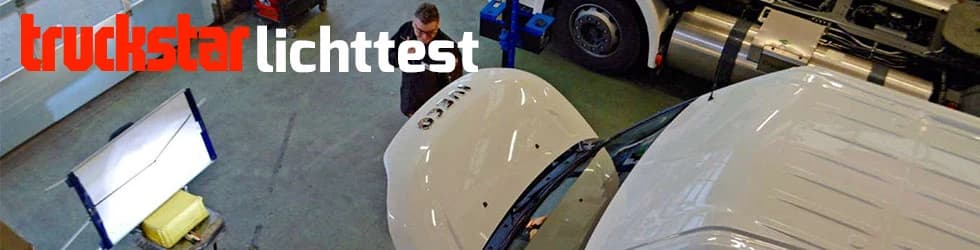
The study put the headlights of a number of well-known car makers through various tests. It looks like only a handful of manufacturers have set aside extra budget for getting their headlights right.

Which manufacturers score, and which do not

The test results show that only 1 car maker sells a car with seriously good headlights.

Bad headlights: could you still get more light out of yours?

So how do you get more and better light out of your "poor quality" headlight? There are several options. A common one is a stronger halogen bulb, which gains you about 20%.

But if you really want to squeeze out everything it has, you are better off with a xenon kit or LED kit. That quickly gets you 300% more light from your headlights.

Easy to install

You do not need to be a first-class mechanic to install a xenon or LED kit. If you can swap the standard bulb, you can in theory fit a xenon or LED kit too. No drastic changes to the headlight are needed. In almost all cases it is completely plug-and-play.

Installing an LED kit

Read the complete LED kit installation guide. To see how the installation goes in practice, watch the installation video on YouTube.

The research

Want to know more about the headlight tests? Watch the video about the research on YouTube.

Halogen, xenon or LED: the differences at a glance

If you have standard halogen headlights, there are roughly three ways to get more light. Each option has its own pros and cons.

Stronger halogen bulb

The simplest step: swap the bulb for a stronger halogen bulb in the same fitting. No extra electronics involved. According to this article the gain is about 20%, so it is a modest one.

Xenon kit

A xenon kit consists of two xenon bulbs and two ballasts. The ballast supplies the high voltage that ignites the xenon bulb. After switching on, xenon needs a short warm-up before it burns at full strength. According to the product details, the H7 Xenon Kit Hilox Evolution II Black gives 4 times more light than halogen straight away, with a 2-year warranty on bulbs and ballasts and a choice of 4300K, 5500K and 6500K.

LED kit

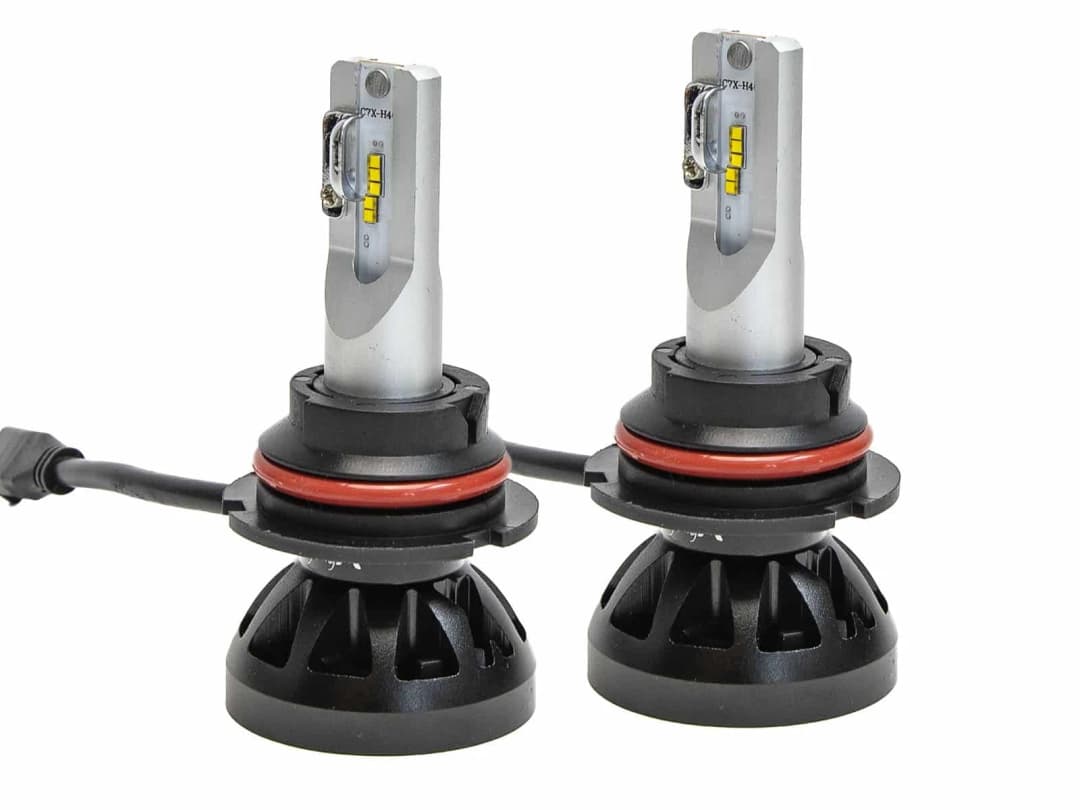
An LED kit consists of two LED bulbs with a driver and often a CAN-bus module. An LED is at full strength instantly. According to the product details, the H7 XTR Black LED kit Hilox Evolution delivers 3,600 lumens per LED, 3.5 times more light than halogen straight away, and the Luxeon Z ES LED chips last up to 50,000 hours: 50 times longer than halogen and 12 times longer than xenon.

Torn between xenon and LED? Look mainly at the space behind your headlight. A xenon kit needs room for two ballasts, an LED kit for two drivers and possibly CAN-bus modules.
What should you look out for when upgrading your headlights?

  1. The right fitting. Every lighting function has its own fitting, such as H7, H4, H1 or HB3. Check your owner's manual or the old bulb to see which one you need.
  2. Low and high beam in one bulb? If your car has an H4, H13 or HB5 bulb, low and high beam share one bulb and you need a Bi version.
  3. CAN-bus. Many modern cars check whether the bulbs work. Because xenon and LED draw current differently from halogen, the system may report a faulty bulb. That is why the Hilox XTR Black LED kits and the Evolution II xenon kits come with a CAN-bus II module.
  4. Space behind the headlight. Measure beforehand whether the bulb, the driver or ballast and the dust cap will fit.
  5. The beam pattern. Before fitting, mark the cut-off line on a wall, and check after fitting that it has stayed the same, so you do not dazzle oncoming traffic.

After fitting, have the beam aimed and check whether your car still meets the MOT requirements (APK in the Netherlands). In doubt, ask the RDW (the Dutch vehicle authority) or your inspector. Please note: according to the product details, these xenon and LED kits have no ECE approval or E-mark and are intended for circuit and private land.

See all options under LED lighting and xenon lighting.

Frequently asked questions about better headlights

How many car makers scored well in the headlight research?
The test results showed that only 1 car maker sells a car with seriously good headlights.
How much more light does a stronger halogen bulb give?
With a stronger halogen bulb you can gain about 20%.
How much more light does a xenon kit or LED kit give?
With a xenon kit or LED kit you quickly get 300% more light from your headlights.
Is a xenon or LED kit difficult to install?
No. If you can swap the standard bulb, you can in theory fit a xenon or LED kit too. In almost all cases it is plug-and-play, with no drastic changes to the headlight.
What is the difference between xenon and LED when you switch on?
Xenon needs a short warm-up before it burns at full strength. An LED is at full strength instantly.
Fire it up

Once a month,
a real letter.

New products, fitting tips and offers. No noise, never sold on.

Made withNeuramerce