Hilox Lighting
LED Low Beam Kit Research: Trash or Treasure?

LED Low Beam Kit Research: Trash or Treasure?

Redactie Hilox Lighting
By Redactie Hilox Lighting
Published
Reading time
3 min

Short answer

What should you look for when choosing an LED low beam kit?

This research into LED low beam kits shows that the first thing to check is the LED chips used, because they say a lot about quality, durability and price. COB chips have high light output but a poor focal point, Cree chips have a limited beam angle, and Philips Lumileds Luxeon Z ES chips come closest to the filament of a halogen bulb.
  • There are generally 3 types of LED chip: COB, Cree (single SMD) and Philips Lumileds Luxeon Z ES.
  • You can spot COB LEDs by their big yellow surface, and they often don't last as long.
  • Plenty of fake Cree LEDs from China are in circulation.
  • Luxeon Z ES chips were developed for the automotive industry; the only downside is the price.

First, a short word on how this research into LED lighting came about. As an Industrial Engineering student at TU/e, I wanted an internship at an e-commerce company where innovation comes first. At Hilox I could also combine that with Eindhoven's passion for light.

When I started digging into the range of LED low beam kits, it turned out to be very hard for consumers to make a sensible choice. So I made full use of the knowledge at TU/e and the years of experience of the Hilox technical team. This research answers the question of what you should really look for when shopping for LED headlights, so that your car, motorcycle or truck ends up with the kit that suits it best.
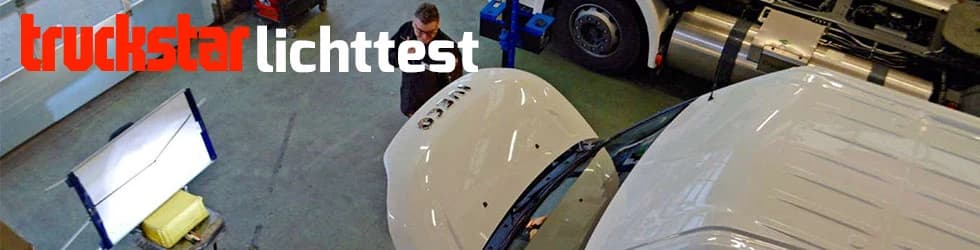
TIP: the TruckStar Magazine light test

In a safety special in the 2018 second issue, a journalist from TruckStar Magazine investigated LED lighting for headlights. What is good, and what should you steer clear of? You can read the answer in this LED lighting test.

Truckstar is the biggest magazine when it comes to trucks, transport and safety, and it comes out with a new issue and new tests every month.

LED low beam kit research: the LED chips

If you want to compare LEDs, look first at the LED chips used. The LED chip says a great deal about quality, durability and the final price. You will generally come across 3 types of LED chip.

  1. COB (chip on board): In this type of LED, several LEDs are placed on 1 chip. Lower and higher quality LEDs are often mixed within the chip, so that it looks like a perfectly good LED to the eye, but the quality is a lot lower and the colour is often not great either. These LEDs often have a very high light output and are dirt cheap to produce. The drawback of COB chips is that, because of their large surface, they have no good focal point or hotspot, so the beam pattern and the colour are not always crisp, or can even be downright poor. Lifespan often leaves something to be desired too. They do have an extremely high light output, but the amount of usable light in the headlight is fairly limited. You can recognise them by a big yellow surface.
  2. Cree (single SMD) LED chip: With this LED, all the light comes from 1 LED chip. Cree is a big LED chip manufacturer that makes perfectly good LEDs with a high light output, used in a wide range of applications such as torches, automotive lighting and bike lighting. These LEDs often have a plastic optic that acts as a kind of projector. You may wonder whether a projector inside a projector headlight will give the result you want. It is a decent solution, but there are better ones. The drawback of Cree LEDs is that the beam angle is limited, so you end up with a poor beam pattern sooner. We also see a huge number of fake Cree LEDs made in China.
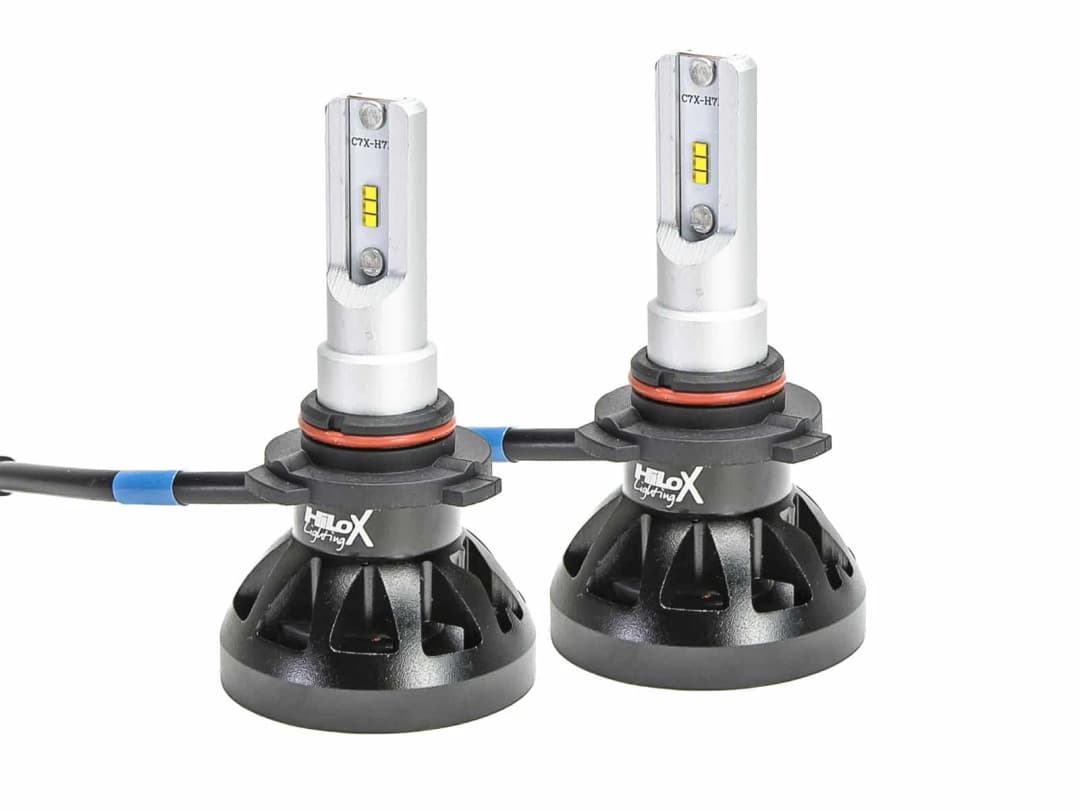
  3. Philips Lumileds Luxeon Z ES (single SMD) LED chip: This is the latest technology and the best quality LED chip, with the very highest light output. These are tiny flat LED chips, often several in a row on the LED body. They were developed mainly for the automotive industry, which is why you rarely see them in other applications. These LED chips are so small that you can match the exact size of the filament and the position of the focal point of the halogen bulb. That is crucial for a perfect beam pattern and the highest light output. Apart from the price, there are no real drawbacks to this kind of LED. These are the LED chips you will also find in our Hilox LED low beams.

On top of our own experience and expertise, we would like to point you to this source: lumileds.com, Luxeon Z ES

Also read Facts and Myths about aftermarket LED upgrade kits.

Frequently asked questions about LED low beam kits

Which types of LED chip are used in LED low beam kits?
You will generally come across 3 types: COB (chip on board), Cree (single SMD) and Philips Lumileds Luxeon Z ES (single SMD).
What is the drawback of COB LED chips?
Because of their large surface, COB chips have no good focal point or hotspot, so the beam pattern and colour are not crisp. Lifespan often leaves something to be desired too, and the amount of usable light in the headlight is limited.
What is the drawback of Cree LED chips?
The beam angle is limited, so you end up with a poor beam pattern sooner. There are also plenty of fake Cree LEDs from China in circulation.
Why are Luxeon Z ES LED chips the best for your headlight?
They are so small that they match the exact size of the filament and the position of the focal point of the halogen bulb. That gives a perfect beam pattern and the highest light output. The only downside is the price.
Fire it up

Once a month,
a real letter.

New products, fitting tips and offers. No noise, never sold on.

Made withNeuramerce