
Over the coming weeks, Rijkswaterstaat (the Dutch road authority) is switching off the lights on many motorways in the Netherlands, officially to save money. In large parts of the country the lights go out between 9 pm and 5 am. On busy stretches they stay on until 10.30 pm. So if you are often on the road in the evening or at night, it matters that your lighting is up to scratch. Below you can read what is allowed on public roads and what you can do about your lighting yourself.
Motorway lights going out? Are you ready for it?
2 min
Short answer
What do you do when the motorway lights go out at night?
Now that Rijkswaterstaat switches off motorway lighting between 9 pm and 5 am, good car lighting matters more than ever. If you want more light on public roads, you end up with xenon or LED as the manufacturer builds it into the headlight at the factory (OEM); if you already have xenon or LED, clean and align your headlights properly.
- On busy stretches the lights stay on until 10.30 pm.
- With OEM xenon or OEM LED you get far more light than with halogen, and road markings and signs light up better.
- Separate xenon and LED kits for a halogen headlight usually have no E-mark, so they are not allowed on public roads.
- Even with halogen you see more with clean, well-aligned headlights and fresh bulbs.
Motorway lights off: still running standard halogen?
If you really want more light, xenon or LED is the step to take. On public roads that means OEM lighting: headlights as the manufacturer supplies them from the factory, with an E-mark and matched to the bulb inside. That gives you up to 60% more light than halogen, and your eyes tire less quickly. Road markings and signs light up as if you were shining a blacklight on them, so you no longer have to slow down to read what the signs say.
Hilox does not supply OEM headlights itself. For those, go to your car brand's dealer or a specialist in original parts.
Expensive?
You are probably thinking: "that will cost a fortune". Usually, yes. Switching to OEM xenon or OEM LED means complete new headlights on most cars, often with headlight washers and automatic levelling as well. That runs into thousands of euros; some brands charge as much as 8,000 to 10,000 euros.
Separate xenon and LED kits for a halogen headlight are a lot cheaper, but usually have no E-mark. In that case they are not allowed on public roads. If you are unsure what is allowed on your car, ask the RDW (the Dutch vehicle authority) or your inspector.
Sticking with halogen? Get the most out of it
If you stay with halogen, you can still gain quite a bit of light. Halogen bulbs give less light as they age, so replace older ones, and always in pairs. Also keep the headlight lens clear and have the beam aligned properly; you can read how below.
Already have xenon lighting?
Then make sure you clean your headlights properly and have them aligned correctly. You can do this yourself or let your local garage do it. Once that is done, you are ready for winter and for the lighting changes on the motorways.
Driving on an unlit motorway: practical tips
Without street lamps you depend entirely on your own headlights and everyone else's. These tips will help you drive more relaxed in the dark:
- Keep your windscreen and headlights clean. Dirt and streaks on the windscreen scatter the light from oncoming traffic, and a dirty headlight gives less light.
- Check that all your lights work. Walk round the car every now and then, front and back.
- Use your high beam only where you can. High beam gives you far better visibility, but switch back to low beam as soon as you could dazzle oncoming or leading traffic.
- Leave more distance. In the dark you judge distances and speeds less well.
- Take a break in good time. Driving in the dark is more tiring. If your eyes start to feel heavy, pull in at a rest area.
- Do not stare into oncoming headlights. Fix your gaze on the right-hand road marking instead.
Halogen, xenon or LED: what is the difference?
If you want better vision in the dark, there are roughly three types of headlight to choose from:
- Halogen: the standard in many cars. A filament in a glass bulb filled with halogen gas. Cheap and simple, but the light is yellowish and less bright.
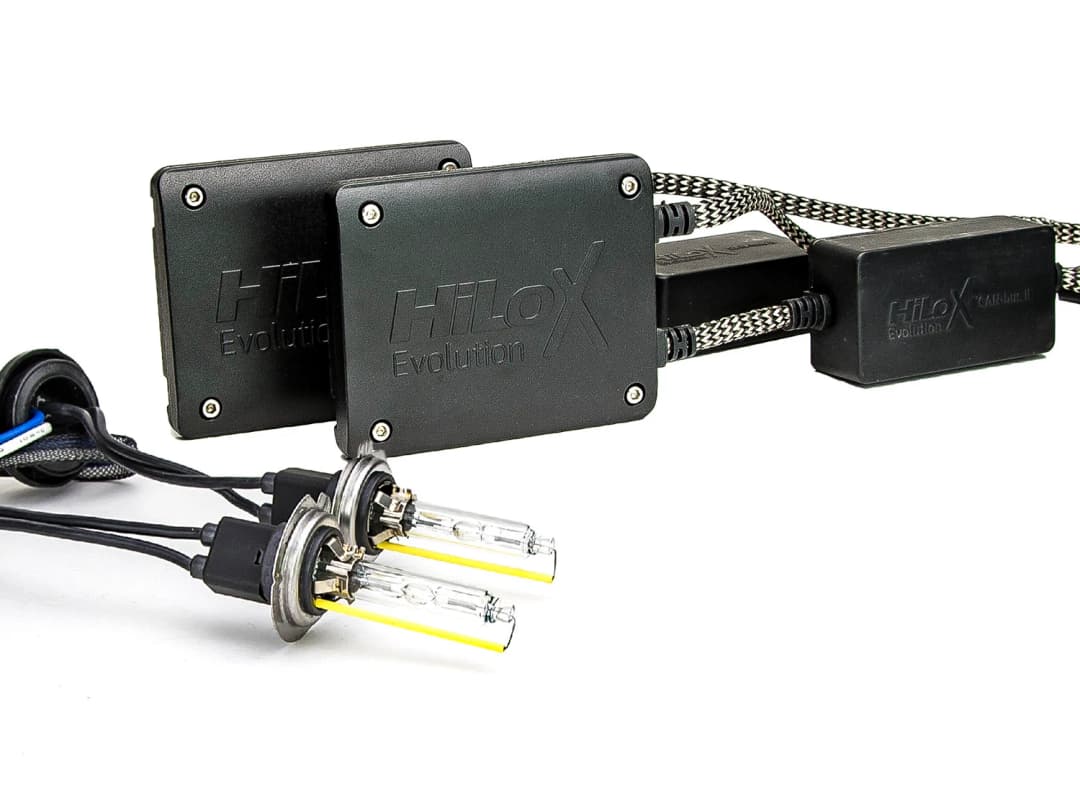
- Xenon: a gas-discharge bulb ignited via a ballast. It gives far more light than halogen, and whiter. A xenon bulb has a short warm-up time: it ignites straight away but builds up to full brightness over the first few seconds.
- LED: at full brightness instantly and uses little power. LED headlight bulbs often have a heat sink or fan at the back, so check there is enough room behind your headlight.
On public roads, xenon and LED are only allowed when they belong to the headlight, as with factory-fitted OEM lighting. Separate kits for a halogen headlight usually have no E-mark. If in doubt, ask the RDW (the Dutch vehicle authority) or your inspector.
Headlights ready for winter: cleaning and alignment
Whether you have halogen, xenon or LED, your headlights only give really good light when the glass is clear and the beam is set correctly.
- Is the glass dull or yellow? Plastic headlight lenses weather in sunlight and road salt, and far less light reaches the road. Read weathered headlights: how to make them like new again to find out how to restore them.
- Is the beam set correctly? Park on level ground in front of a wall or garage door. The cut-off line of the low beam should be equally high on the left and right, and slightly lower than the height of the headlight itself.
- Do both bulbs burn equally bright and in the same colour? A bulb that is clearly dimmer or a different colour is often due for replacement. Ideally replace bulbs in pairs.
- Does the height adjustment work? Many cars have a knob or automatic system to lower the headlights when the car is heavily loaded.
Frequently asked questions about driving without motorway lighting
When do the motorway lights go out?
In large parts of the country the lights go out between 9 pm and 5 am. On busy stretches they stay on until 10.30 pm.
How much more light does xenon give than halogen?
With xenon you get up to 60% more light and your eyes tire less quickly.
What does switching to xenon or LED cost?
On public roads it has to be OEM xenon or OEM LED, which usually means complete new headlights. That can run into thousands of euros. Separate kits are cheaper, but usually have no E-mark, so they are not allowed on public roads.
What should you do if you already have xenon?
Clean the headlights thoroughly and have them aligned properly. You can do it yourself or have your local garage do it.
What is the difference between xenon and LED?
Xenon is a gas-discharge bulb with a ballast and a short warm-up time. LED is at full brightness instantly and uses little power, but often has a heat sink that needs room behind the headlight.
Keep readingThree more

Three more
from the archive.
Car lighting and car insurance
Blown car bulbs count as normal wear and tear and are not reimbursed, while theft and damage sometimes are. Find out what your car insurance covers and how LED and xenon lighting can help.
Hilox XTR LED kits als beste getest door Truckstar Magazine
In de dimlicht LED test van Truckstar Magazine kwam de Hilox XTR Black als beste uit de bus. Lees hoe de leds scoorden in reflector- en lenskoplampen, op koeling, CAN-bus en APK.
Hilox Father's Day gift ideas
Looking for a cool Father's Day present? Six Hilox gift ideas, from XTR LED kits and MTB lights to LED dog collars, leashes and electric pepper and salt mills.
Fire it upOnce a month,
Once a month,
a real letter.
New products, fitting tips and offers. No noise, never sold on.

