Hilox Lighting
Xenon vs LED vs Halogen: The Real Differences Revealed

Xenon vs LED vs Halogen: The Real Differences Revealed

Redactie Hilox Lighting
By Redactie Hilox Lighting
Published
Reading time
6 min

The short answer

Xenon vs LED: which is better for your headlights?

Xenon or LED? It depends on what matters most to you. Xenon reaches up to 4,200 lumens, LED up to 3,600 lumens with a much longer lifespan. LED is more efficient, runs cooler and is often easier to fit, while xenon fits just about everything.
  • Halogen: 1,100 lumens at most and a lifespan of 1,000 hours.
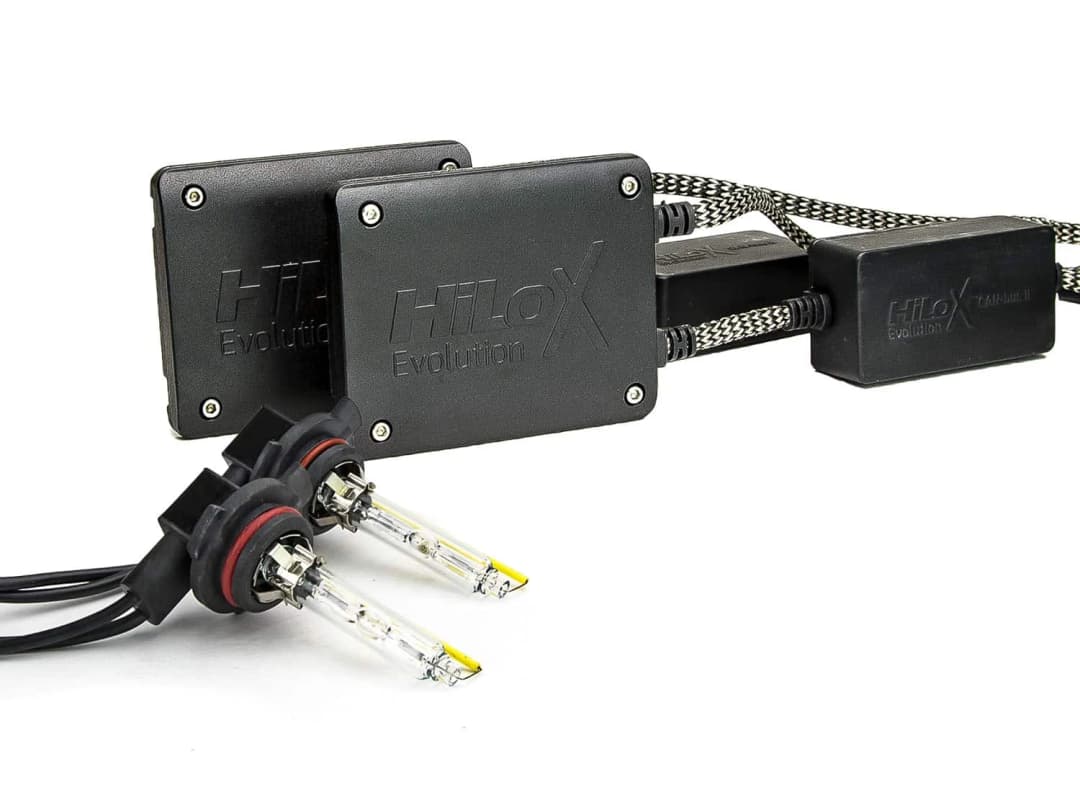
  • Xenon: up to 4,200 lumens and 3,200 hours of lifespan, with a ballast that turns 12V into 23,000V.
  • LED: up to 3,600 lumens and 50,000 hours of lifespan, with a compact driver.
  • Average fitting time: about 35 minutes for xenon, about 25 minutes for LED.

One of the questions we get asked most about our automotive lighting is: which is actually better, LED or xenon? To get to a sensible answer, you first need to ask yourself: 'What matters most to me?' Because the right choice is a surprisingly personal one.

Some people want the highest light output. Some want the longest lifespan. And some simply want whatever has the latest developments in automotive lighting.

We'll give you a hand, because choosing can be genuinely tricky, especially if you're buying your first LED or xenon upgrade kit.

Xenon (HID)

To understand what xenon is and what it does, I'll draw a few comparisons to give you a better picture.

No filament

Unlike halogen, a xenon bulb has no filament, which is one of the reasons xenon lasts up to 4 times longer. Depending on quality, a xenon bulb lasts up to 3,500 hours, while halogen often gives up after 800. Quite a difference.

Xenon gas

What makes the bulb glow is the xenon gas. Xenon is a noble gas, obtained from the distillation of liquid air at extremely low temperatures (-180°C to -190°C). It glows best at a voltage of around 23,000 volts. Because the gas is sealed under pressure in a glass tube, it doesn't wear out quickly, which makes a xenon bulb very durable and efficient.

Starter / ballast

To get a xenon bulb firing at 23,000 volts you need a converter. This converter, also known as the ballast, turns 12V into 23,000V. A good-quality ballast is therefore crucial for your xenon bulbs to work properly. It has to be stable and powerful, and work on wiring that was really designed for a halogen bulb. It's seriously complicated technology, which is why it's often rather pricey.


CAN-bus and lighting control with xenon

Modern cars, motorbikes and trucks are often stuffed with high-tech gadgets that keep the driver safe and comfortable. Vehicles with a CAN-bus and/or lighting control system check whether the bulb is still working, and if it isn't, a warning light comes on in your dashboard. That also happens when you upgrade from halogen to xenon, only then most on-board computers think the bulb is faulty because of the difference in power and current draw. A halogen bulb is 55W, a xenon bulb is 35W. To make up for that difference, the product needs the right electronics to imitate the behaviour of the halogen bulb.

Efficiency and heat of xenon

Every light source gives off heat. A 55W halogen bulb might manage a light output of 1,000 lumens at a temperature of 200 degrees Celsius, which is not exactly efficient. A xenon bulb, on the other hand, is 35W, and the modern xenon bulbs we supply reach a light output of 4,200 lumens at half the temperature of halogen.

Fitting a xenon kit

Fitting a xenon kit is very straightforward in most cases. You'll often have to drill a small hole in the dust cap to feed the wiring through and to place the ballast outside the headlight. The average fitting time is about 35 minutes.

To see how it's done, watch the fitting video: watch the video on YouTube.

Beam pattern with reflector and projector headlights

Like halogen, a xenon bulb radiates light through 360 degrees. With a good xenon bulb, the focal point of the gas sits in exactly the same position as the filament in the halogen bulb. That gives you the same beam pattern as with the standard light source, so it doesn't matter whether you have reflector or projector headlights. With projector headlights we do often see a sharper cut-off line between light and dark.

LED (light emitting diode)

Diode

LED has huge potential for the future. Super durable, small and very efficient. High light output, and many times cooler than halogen or xenon. That's because there's no filament or gas, just a light-emitting diode: an electronic component that is incredibly durable and efficient. That's why, for example, the Luxeon Z ES LED chip we use in our LED upgrade kit lasts well over 30 to 50 thousand hours.

Driver

Where a xenon bulb needs a ballast to work properly, LED needs a driver. The driver feeds the LED chips a constant current so they give steady light without hiccups. It needs fewer and smaller components than a xenon ballast, so the driver is also many times smaller and easier to fit inside the headlight unit.

CAN-bus and lighting control with LED

Just like a xenon kit, an LED kit often has to deal with vehicles that have CAN-bus and/or lighting control. For that, a special CAN-bus module has been developed that talks to the vehicle, so no annoying warning light comes on in your dashboard. There are 2 types of CAN-bus module. The most common and cheapest solution is the module with a built-in resistor and capacitor. This technique is simple and stable, but doesn't work on every vehicle. The newest type of CAN-bus module is fully electronic and uses a smart IC chip that matches the power to the vehicle in question, so no warning light comes on for a supposedly faulty bulb.

Efficiency and heat of LED

LED is even more efficient than xenon. The LED chips produce an enormous amount of light at low power and, with a good cooling system, don't get hotter than 100 degrees at an ambient temperature of 40 degrees. We regularly get asked about heat, and whether the LEDs don't get too hot. Consider that question answered: your headlight will not melt.

Fitting an LED kit

Fitting an LED kit is often a little easier than xenon, and in most cases everything fits inside the headlight. If not, you can still place the CAN-bus module outside the headlight, for example. With most LEDs it's wise to measure first whether you have enough room. With the XTR LED that's often not necessary. The average fitting time is about 25 minutes.

To see how it's done, watch the fitting video: watch the video on YouTube.

Beam pattern with reflector and projector headlights

A halfway decent LED like the ones we offer has a radiation angle of 270 degrees. It matters a great deal that the LED chips sit in the right position in the headlight. The ideal position is left and right. The focal point of the LED chips matters too: it has to sit in exactly the same position as the filament in the halogen bulb. That gives you the same beam pattern as with the standard light source, so it doesn't matter whether you have reflector or projector headlights. With projector headlights we do often see a sharper cut-off line between light and dark.

There are an awful lot of LED kits on the market where the manufacturer paid attention to quantity rather than quality: high light output but a poor beam pattern and/or a short lifespan, and of course recognisable by the low price. You can put good-quality LED chips on the board, but if they aren't in the right position, they don't do you much good. Our intern from TU Eindhoven recently looked into this, including the better-quality LEDs.

Xenon vs LED: halogen, LED and xenon side by side

Halogen

  • Light output: 1,100 lumens max
  • Technology: filament
  • Lifespan: 1,000 hours
  • Fitting: always fits
  • Price: 10 to 35 euros

LED

  • Light output: up to 3,600 lumens max
  • Technology: light emitting diode
  • Lifespan: 50,000 hours
  • Fitting: fits 95% of the time
  • Price: 140 to 209 euros

View LED kits

Xenon

  • Light output: up to 4,200 lumens max
  • Technology: gas discharge
  • Lifespan: 3,200 hours
  • Fitting: always fits
  • Price: 140 to 239 euros

View xenon kits

Frequently asked questions about xenon and LED

How long does a xenon bulb last?
Depending on quality, a xenon bulb lasts up to 3,500 hours. Halogen often gives up after just 800.
Doesn't an LED get too hot in the headlight?
No. With a good cooling system, the LED chips don't get hotter than 100 degrees at an ambient temperature of 40 degrees. Your headlight will not melt.
Why does a warning light come on in your dashboard after switching to xenon?
Most on-board computers think the bulb is faulty because of the difference in power: a halogen bulb is 55W, a xenon bulb 35W. The product therefore needs the right electronics to imitate the behaviour of the halogen bulb.
Which CAN-bus modules are there for an LED kit?
There are 2 types. The most common and cheapest module uses a resistor and a capacitor: simple and stable, but it doesn't work on every vehicle. The newest type is fully electronic and uses a smart IC chip to match the power to the vehicle.
How long does it take to fit a xenon kit or LED kit?
The average fitting time is about 35 minutes for a xenon kit and about 25 minutes for an LED kit.
Fire it up

Once a month,
a real letter.

New products, fitting tips and offers. No noise, never sold on.

Made withNeuramerce